II. [Part 3] Methodology – To the 'Ace' Level

In Work (Last update 19 March, 2010)
 boxsunset-a-73


  1. Can the "train to the ace level" concept behind Top Gun, Red Flag, National Training Center at Ft Irwin, i.e. the combat training center or "CTC" concept be applied to hyper complex crisis, worst case  disaster command control learning?

  2. Would "first mission" exposure for operational level decision makers provide value added? (consideration that  given funding constraints, daily normal real world law enforcement, fire response, emergency management, and job rotation, there may be only one opportunity in a three year cycle to expose the candidates. Can one exposure make a difference?  What would be the impact of dynamic simulation interjected into the classroom?

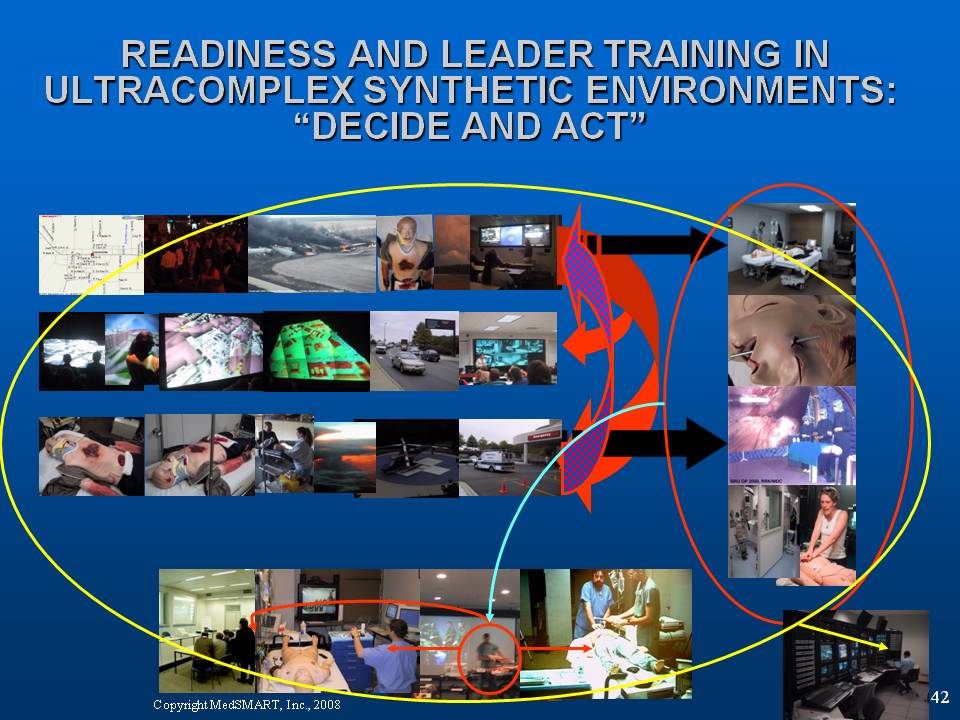
  3. What needs to be included in pre-exercise classroom and simulated command problems to make the learning and training effective? In particular, by who and how are cognitive elements and related decision making in crisis taught?

  4. What kind of research needs to be done in this area?

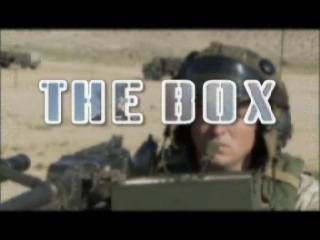
  5. Can we create what this picture implies for decision makers?
complex-multiagency-training


Prevous Parts to "Train to the Ace Level" -

II. Training Decision Makers to the 'Ace' Level [Part 1]


II. [Part 2] Scenarios – To the 'Ace' Level

"Methodology" is in work, but three examples of "working" the problem are offered:

This page has the following sub pages.

3 Responses to “II. [Part 3] Methodology – To the 'Ace' Level”

  1. Ed Beakleyon 02 Mar 2009 at 11:53 pm 1

    HOLD For Admin

  2. Dag von Lubitzon 02 Mar 2009 at 11:54 pm 2

    I would suggest contemplation of a modular approach at some time, so that the entire progress can have a continuum of development from the simplest to the most complex with the availability of “just-in-time” components.

    If mobile center is contemplated (should be, since it provides significant expansion of reach), I have several years ago developed a proposal for TATRC on exactly such theme. I will have to dig it out from archival files, if at all it exists since it was made in 1998 I think, and can post it with some minor modifications. The proposal was geared for training paramedics, and was based on site/distributed simulation using all available means of training and really taxing the participants to the max. TATRC threw it out, because they had absolutely no idea what we were talking about even if we have shown it to them several times. Despite growing popularity current work still does not come up to the level we proposed. Hence: you may use in adapted form, or we may form a consortium and develop the whole thing on the “open platform” basis that will be accessible to all involved agencies.

    In some ways, it might be the beginning of the college proposed by John based on a massively distributed component, and operating on ToL principles so that whatever smart is generated in the process (best practices/new knowledge/evidence-based approaches) can be disseminated throughout the entire field and it neighbors rather than kept locked in the “domain vault.”

    Mind, the above is an outline worth preliminary contemplation, but not the pivot at the moment, In order to be effective, steps outlined by Ed (and Fred in his previous message) need to be made, specifics developed, and then the whole thing created as a concept ready for truly public presentation. Actually, if the intention is to do rather than talk, I would expect not less than about 12 months of fairly hard work. I would also say that it is worth it. In the end then, since it is an pretty “open source” activity that we have, Ed, can we ask you to act as a “developmental archivist”?

    There has to be a tight methodology to this process, and structure for development ought to be created as rapidly as possible. Exchange of thought is wonderful, but unless the good ideas that emerge in the process are solidified into actionable tools that can be UNIFORMLY used by everyone and applied to THEIR specific tasks (the very essence of “open source software”) we will have achieved nothing. The suggested transition stage is the hardest, demands major effort and devotion to the idea, and WILL put demands on your personal time.

  3. Dr. Fadi Esmaeelon 03 Mar 2009 at 12:00 am 3

    Ed – thank you for this discussion. Let me speak from a policy-making level if its ok.

    “Low Probability-High Impact” events are actually “Absolute-Certainty, Low-Predictability, High-Impact” incidents that take place all the time….——————————————————————————————————————Re streamlining:

    During the delivery of more than 100,000 training hours in SoCal and supporting the delivery of about five times this amount all over the country – an idea came up to establish a Southern California Training Collaborative that will include EXISTING specialized training entities.
    We already have several active training centers in SoCal that we should network and build a common philosophy for. CTC idea seems to fold easily into this framework. Now we need to create the momentum…good luck.—————————————————————————————————————————-
    Re use of high-level officials training

    in 2003 – we held two top level executive TTX hoping to inspire the agencies to see crisis decision making as part of a comprehensive picture beyond the next grant-cycle. Federal officials (assistant secretary level) Mayors, council members, state legislators, governor’s rep, county supervisors, agency heads, flag officers, corporate leaders were in participation. Without divulging it to the participants we used some military-style simulations and cutting edge TTX design to induce “constructive failure”. The trick was in the format.

    We also lead a Legislative-Executive TTX that included 14 M.C.’s and Executive Branch leaders (Sec Def, Surgeon General, Joint Chiefs, SHS
    etc.)- this time under NDU’s tutelage. This time we played a seaport security scenario aimed at the same goal of underscoring the “system of systems” crisis decision-making environment.

Trackback URI | Comments RSS

Leave a Reply