Mar.02.2011
by Ed Beakley
1. The Pilot’s Story: Bruce Kallsen VA-115
[This is from the book THERE I WAS … Sea Stories from the U. S. Naval Academy Class of 1965, and e-mail exchange bewteen Bruce and myself .]
It was the 24th of October, 1972, and I and my Bombardier/Navigator (B/N), “Bix”, were returning to the USS MIDWAY in our A-6 aircraft from a night low-level bombing mission over North Vietnam. Life was as good as it could be under the circumstances – we’d flown a noncombat flight earlier in the day, a maintenance check flight which required 15 minutes of system functional checks, and then allowed two hours of acrobatic play amongst the clouds, while waiting for our recovery time on the aircraft carrier. We both commented it had been the most enjoyable flight of the cruise to date. In addition, Bix was to leave the ship the next morning on two weeks of well-deserved leave. This was Bix’s first combat cruise, my third, and we genuinely liked each other and enjoyed flying together. Bix was a quiet, well-built, and likeable individual who somehow played a decent guitar though hampered with pudgy wrestler-type fingers. He was an exceptional B/N and good friend. My own leave date was only a few days away. But this was to be a night recovery unlike any other, before or since.
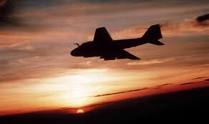
Upon contacting the ship, we informed them we had two “hung” 500-pound bombs, ordnance we had tried in vain to drop. It was the ship’s call as to whether we brought the ordnance aboard upon landing, or jettisoned it at sea. The disadvantage to jettisoning was that it required jettisoning the Multiple Ejector Rack (MER) as well. The MER was a $5,000 piece of equipment that transformed a single wing station into one capable of carrying up to six bombs, and MERs were in short supply. Complicating the matter: the bombs were hung on station 5, farthest outboard on the wing. Their combined weight and moment arm put the aircraft right at the limit of maximum asymmetric load for an arrested landing. Since naval aviators as a group are quick to volunteer in difficult situations, decisions such as this were left to the ship/airwing/squadron representative, and were based upon the circumstances and individual pilot’s prior landing performance. The powers that be directed that we bring the bombs aboard.
The landing was further complicated by additional factors: There was no natural wind, so the aircraft carrier would have to create the wind over the deck through its own speed through the water. Since the landing area was angled 13 degrees to the left of centerline, this meant there would be a crosswind coming from the starboard side. Additionally, it was a dark, moonless night, with no discernible horizon, the bane of the naval aviator. Maintaining wings level on final approach would be a challenge. Also, the aircraft had been approved in the previous year for increased “maximum weight” arrested landings. The new limit was 36,000 pounds, vice the 33,500 pounds previously authorized. Our predicted landing weight was 200 pounds under the new maximum. Finally, the flight deck was “heaving,” slowly rising and falling with the swells of the sea. All night carrier landings are difficult, but this one would be especially tricky.
Night Carrier Landing: 3/4 of a mile “Call the ball”
Somebody said that carrier pilots were the best in the world. They must be or there wouldn’t be any of them alive.
The approach to the ship was normal, and at 3/4 mile, Bix called the “ball,” indicating we had acquired the “meatball” landing aid and were commencing our visual approach. Nearing the midpoint of the approach, the ball went high, the LSO (Landing Signal Officer) called me high and I had already made the correction he was calling for to put us back on the optimum glide slope. Another “you’re high” call was made, and I corrected again. At the time I thought the second call was also from the LSO, but it turned out Bix had made it, something he had never previously done. The touchdown brought with it the immediate realization that things were not normal….WE HAD CRASHED!!
Unknown to us at the time, the starboard axle had sheared upon contact with the flight deck, and it was now an uncontrolled missile careening up the flight deck. The stub of the starboard landing gear was dragging on the flight deck, causing a pronounced right-wing-down orientation. My reaction was the normal for all arrested landings; I applied full power in the event the aircraft failed to engage the arresting wire. Unfortunately, the starboard stub caught the arresting wire, the cross-deck cable normally snagged by the tailhook. As the wire minimally slowed our forward progress, the aircraft tilted far over to the left, threatening to roll inverted. Flashes of being upside down under a burning aircraft crossed my mind, but as quickly as the crash had occurred, the wire slid down the length of the landing gear, and released its hold on our badly crippled conveyance. The aircraft fell back to a right-wing-down attitude as I continued my efforts to power the aircraft off the angled deck. It was apparent we were going too slowly to have adequate flying speed if we left the flight deck, but I felt we could get the aircraft off the deck and then eject. Unfortunately, the laws of physics demanded otherwise.
As the right landing gear stub continued in a howling screech to drag up the flight deck, it caused the trajectory of the aircraft to slowly arc to the right, out of the landing area, and into the pack of aircraft at the front of the flight deck. Immediately in our path was the F-4 just landed by our Air Wing Commander (CAG), with CAG climbing out of the cockpit. Undeterred I continued at full throttle, with the aim of shoving the F-4 off the flight deck, following it, and ejecting. Again physics intervened, and the result was the dismembering of the left wing and tail of my aircraft, and a forward displacement of the F-4, breaking CAG’s leg rather severely. By this time it was apparent our aircraft couldn’t leave the flight deck, so I shut down the engines to decrease the velocity and severity of our imminent impact.
During this chaotic ride, as my aircraft drifted out of the landing area, we entered the area of the flight deck occupied by previously landed aircraft and the personnel attending to them. The reactions of individuals confronted with my uncontrolled aircraft ran the gamut, from frozen disbelief as I ran them over to instinctive leaping to the side, apparently warned only by the sound of my screeching landing gear, or perhaps the abnormal vibration of its contact with the flight deck.
As all of this was happening, my awareness was rapidly closing down – initially I was concerned with the entire flight deck, the aircraft and personnel thereon, then I focused upon just my aircraft and the F-4 I hit, and finally I concentrated on just where my portion of the cockpit would come to rest. Undoubtedly, Bix was reacting in like fashion: the next events that caught my attention were two bright flashes to my right. I looked to the right expecting to see the bombs exploding; instead, I was shocked and angered by what I DIDN’T see … Bix was gone!! I couldn’t immediately grasp that he had ejected, and wondered how the heck he’d gotten out of this hellish ride. I have since been reminded that anger is the most common manifestation of fear, and it’s safe to say fear was riding that cockpit with me. Bix had obviously seen that his portion of the aircraft was going to impact a parked A-7 rather severely, he would undoubtedly be seriously injured, if not killed outright, and he decided to eject from the aircraft, although we were outside the then-limits of the ejection seat. Conversely, my little portion of the cockpit appeared headed for an opening between two aircraft, and it appeared survivable. I chose to ride it out. Our separate and individual decisions could easily have been reversed.
The aircraft came to a jarring halt as it struck the parked A-7s, crashing my remaining wingtip through the canopy of an A-7, leaving a furrow in the helmet of the squadron commander, who was unstrapping, having just parked his aircraft. He barely had the room to duck out of the wingtip’s path. In contacting the parked aircraft, the cockpit accordioned around me, squeezing the console between my legs together, and puncturing and confining my left leg. My first thought was to jettison the canopy, but pulling the jettison handle had no effect; it was no longer attached to the activating apparatus. Failing this, I pulled my ditching handle, which would release me from the ejection seat, but this left me attached to the seat pan upon which I sat and the survival gear it contained, a very cumbersome configuration for climbing out of and over aircraft in reduced visibility. Hurrying my efforts were the reflections of my tail aflame from the spilling hydraulic fluid and fuel. Finally, I unstrapped in the normal fashion, grabbed my left leg with both hands, jerked it from its confinement, and crawled out the hole left in the canopy by Bix’s unannounced departure.
In the meantime, the crash and rescue truck (every carrier had one after the ENTERPRISE fire of 1969, which I had observed from the air) had fallen in behind me as my aircraft careened up the flight deck with flames trailing from my broken fuselage. The brave crashcrew had the fire entirely quenched within 90 seconds, a testimony to their skill and courage.

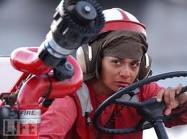
Current-day CV Crash and rescue
Crawling over the A-7 and down into the catwalk, I hurried back to the island as the firetruck pulled up behind my aircraft spraying fire retardant foam. My main concern was to be sure the powers that be were aware Bix had ejected, apparently over the side, and a search must be commenced. I hurried to the island, down the ladder and into our wardroom. As our duty officer caught sight of me, the blood drained from his face, and he turned white as a ghost. He had assumed I was killed, and couldn’t believe his eyes. I urged him to report Bix’s situation, and sat for a few minutes collecting myself. As the adrenalin rush eased, my legs slowly began jumping uncontrollably, and a squadron mate accompanied me as I walked down to Sick Bay to attend to my injured leg.
Sick Bay was a bedlam of activity as the surgeons triaged the accident victims upon their arrival, seeing to the needs first of the most seriously injured. These were individuals with lacerations and broken bones caused by careening aircraft or their severed parts. One man had been refueling an aircraft as it was struck, breaking the fueling hose connection and immersing him in a spray of jet fuel, much of which he ingested, later succumbing to its poisonous effects. With a relatively minor wound, I was one of the last treated, having been given a Valium to calm me as I had witnessed the carnage. CAG was lying there with his broken leg, awaiting his turn at treatment. I took the occasion to apologize to him for the damage caused. He looked at me with a large smile, and said no apology was necessary. His injury was his ticket home and out of the war.
An extensive search was conducted for Bix, but he was never found, apparently having been pulled underwater by his parachute, a common occurrence in those days if one was unlucky enough to not free oneself from the parachute immediately upon water entry. Four other sailors were killed that evening by careening aircraft parts or fuel ingestion. I suffered a puncture wound and surprising muscle soreness from the exertion expended; but I was incredibly lucky. I sent a Red Cross telegram to my wife to let her know of my injury, and wellbeing; unfortunately, the ship had informed her I had injured my right leg, so when I reported my left was hurt, she assumed I was so traumatized that I couldn’t tell right from left. After ten days of recuperation, I started flying again, delaying my leave until after I had proven I would be able to continue flying from the carrier.
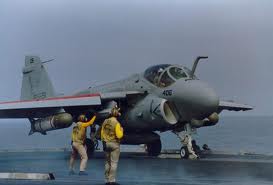
The aftermath: As with all aircraft accidents, an investigation followed to determine the cause. Also as in most accidents, more than one thing contributed to the mishap. Primary cause was the starboard crosswind was outside acceptable limits, and I should never have been allowed to land under those conditions. The crosswind contributed to the aircraft touching down in a right wing down attitude, causing the right axle to bear the major load from my asymmetrical bomb load. Additionally, the flight deck was coming up as I touched down, adding to the extreme nature of the event. Jettisoning the bombs and the $5,000 MER would have been very good choices in retrospect. Contributing also was the fact that my approach was not optimum; I received a “Fair” grade for the approach, equivalent to a B in academic terms, or perhaps a B-. A perfect pass might have prevented the accident, but the consensus was that, given all other factors, and primarily the extreme crosswind, the approach was probably impossible to be made in a safe manner …. little consolation for the deaths of five shipmates.
Night landings on an aircraft carrier were always extremely challenging, but prior to this mishap, they were sometimes fun and exhilarating, especially on moonlit nights. After this night, however, night carrier landings held a new dread, which never entirely left me.
Next:
2. Landing Signal Officer Perspective
Go Back:
IV. Bad Night for Schoolboy – And Other Stories of the Carrier